gooollysandra

Thoughts on thoughts and images of beautiful things

Tag Archives: Art

“To sustain ardor, one must be in love not only with the thing itself, but also with the idea of the thing itself.”

0

“Moral: To sustain ardor, one must be in love not only with the thing itself, but also with the idea of the thing itself.”

I recently read this quote by Stephen Dankner in a newspaper article in The Advocate, which is based in New England, and I read it at just the perfect moment as I am trying to decide what I want to do with my future; more precisely, what I want to pursue graduate studies in and this quote sums it all up. So what do I love in essence and in thought? At the moment I am trying to make up my mind between Art History and Film. Submitting applications for both is a bit confusing and it’s hard to imagine which I would enjoy more. But reading this quote brought up a very basic, fundamental notion that I hadn’t thought of but makes all the sense in the world. Do most people have the luxury of loving what they do as well as the idea of it? Probably not. I think it’s a hard to achieve because it’s hard to even figure out what you love in essence AND in thought.

Jacob Shriner Art

0

a8081f649375e113c86a70f462c456e1

Check out my boyfriend’s new Art Blog! – http://jacobshrinerart.blogspot.com

Artist Statement

“My art is primarily concerned with themes of melancholy as an existential state resulting from a deep personal awareness of the mutability of life and the inexorable cycle of creation and destruction. Employing the human figure as the agent of expression, I paint not to emulate the appearance of reality, but rather to communicate my aesthetic emotional response to the physical and intellectual condition of being alive.” – Jacob Shriner

What makes art valuable?

0

“Unlike art, Newsom said, ‘design is not inherently valuable.'”- Designing Men by Paul Goldberger, Vanity Fair 

This quote brought me back to a Philosophy of Art class I took in college. So if design is not inherently valuable, then art is? And what is it that makes art inherently valuable if that is the case? It’s a difficult question with no clear answer, but it is very interesting. How does art gain its value? Does it depend on the artist? And how does that artist gain enough notoriety or credibility to create ‘valuable’ artwork? Or does it depend on its reception and how many people see it? But how does an emerging artist break into the art world and gain exposure? All these questions lead to a very complicated structure that exists in the art world, whether the art is mainstream or unrecognized, and it can be difficult to know where and how to start answering these questions.

What really strikes me is how artists gain notoriety. How do they get discovered? Does it require money to pay someone to show your art in a fancy gallery regardless of talent? Or can regular people submit their art to galleries and be accepted based on merit and talent? That would certainly be the hope, but it seems increasingly harder to do that in this day and age.

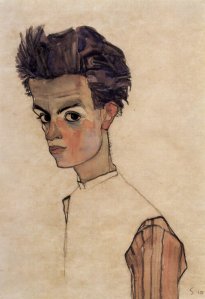
Here are two works by a famous artist, Egon Schiele. I like them, but someone else who may not like his style may not like them at all. Either way, he is an established, well-known artist. I not only like them aesthetically, but I also like them knowing the historical and cultural context they come from – early 20th century Vienna. It helps that he had a famous artist as a mentor, Gustav Klimt, which undoubtedly propelled his career forward. So perhaps this is the way to do it…seek out a mentor who has relative notoriety and learn what you can from him/her in the hopes of it leading somewhere.

imagesSelf-Portrait by Egon Schiele.jpg

So what makes these two works valuable? The fact that they were done by a famous artist? Or would they be valuable in their own right because of their aesthetic quality even if you didn’t know who they were done by? Which brings up another question – when you look at a piece of art, can you tell whether or not it was made by a famous artist? I think we instinctively want to know who the artist behind the work is when we look at art, or at least I do, and if you are the least bit educated in art history you will know whether or not they are well-known. Therefore, I don’t know if it is possible to look at a serious work of art and separate it from the artist. And if we can’t separate the work from the artist, how do we know we like the work for the sake of the work itself or because of the artist who made it? For me the two go hand in hand. It is very hard to separate the two. But often there are works by artists that I don’t like even though I may like the artist as a whole. For example, Egon Shciele – I like him as an artist and I like many of his works, but not all of them. So in these cases, when I like the artist on the whole but not a particular work by that artist, I judge the work for the work itself and not for the artist. If one liked every work by a particular artist, one would be judging the work by the artist and not by the individual works. I don’t think there is one approach to evaluating art that is better than the other, they are just different.

But still, regardless of how one evaluates art, how does art become valuable? It seems strange to place a price tag on a work of art because it is hard to assign a value to it in terms of weighing how much the materials cost, how much the labor is worth, and what the desired profit is. It’s not like an object made in a factory that can be priced in this way. There is something about art that is transcendental by which it acquires value. And it is precisely for this reason that the price of art is typically very high – because its value is so hard to define so it is just easier if we give it a high price tag. It is a shame though because this means that it is really only available (to own at least) for the rich. Those who can’t afford to own a nice work of art can still appreciate it in a museum or gallery, but the ownership of art is a luxury for the wealthy. I tend to think that even if you own a work of art, you don’t really own it, but are rather just taking care of it and keeping it safe for the artist who created it, who I believe still ‘owns’ it. It is one thing to buy a work of art and own it in that sense, but I don’t think that means you really own because you didn’t create it. I believe the ownership lies in the creator, even if it is no longer in the creator’s physical possession.

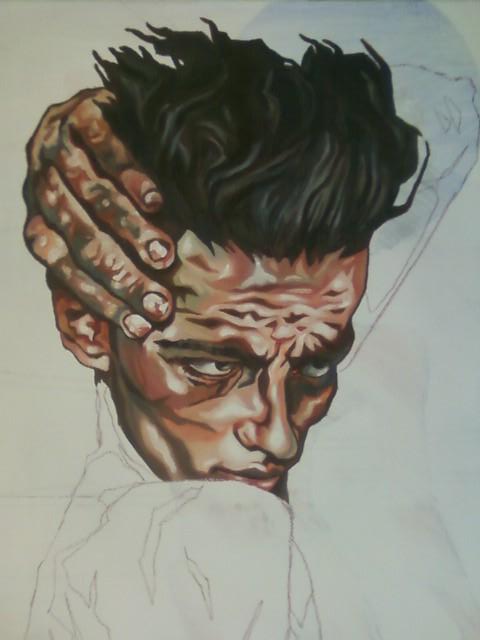
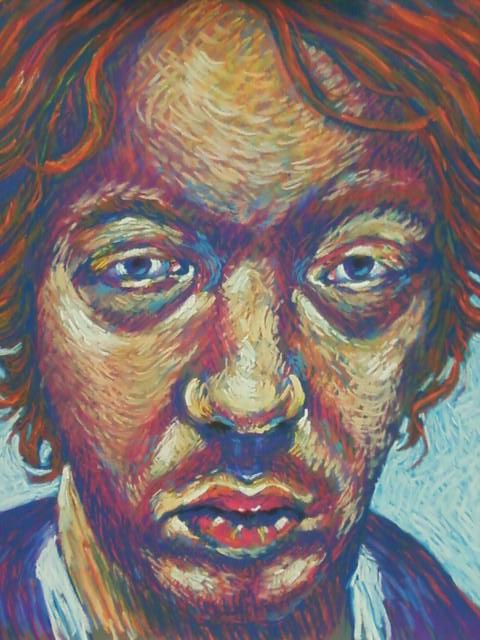
In an attempt to help my artist boyfriend gain exposure, I am going to present some of his art here. How do you think it compares to Egon Schiele? If you didn’t know that it wasn’t made by Egon Schiele, would you think that it possibly could be? Or Van Gogh maybe?

photo

photo 1

The way that artists draw inspiration from other artists and tend to imitate their style is quite common,  you can still tell that they are done by different artists. Artists can draw upon inspiration from other artists while still creating their own style.

photo

 It’s a shame that some artists, or perhaps even most artists, only gain notoriety after their death because they don’t get the chance to revel in it  or reap the financial rewards of being a well-known artist. Why is it that many artists  only become famous after their death? Is there something about the fact  that they’re no longer living that their work becomes almost sacred  because you know they can’t make any more of it? It’s a strange thing and  there is something that just doesn’t seem quite right about it.  Artists should  be able to experience their own notoriety and know that their art is appreciated by people.

More about Egon Schiele and his work on Artsy.

Art’s Intrigue

2

This past year, I took a philosophy of art class and it was extremely interesting. Deciphering what a work of art is, or even what counts as art, regardless of whether or not it is good, is rather difficult. Trying to get past the subjectivity of differing tastes in art is challenging enough, but then deciding how we go about judging art is even harder, once again because of differences in opinion. Throughout the course we explored various theories on art, both old and new, including those of Plato, Clive Bell, George Dickey, Denis Dutton, Kant, Dewey, Susan Sontag, Hume, Elaine Scarry, and others.

So what comprises art? Plato’s idea is that we begin with art, or forms more generally, and as we intellectualize the forms that we witness or experience we form a more refined concept of forms, or art at this point, and come full circle. Bell believed that art was that which possessed significant form, but what exactly significant form is, is unclear. For Dickey, a work of art has to be an artifact and it has to be made for a public audience (the public audience does not necessarily need to be a big audience, just as long as there is at least one member). This idea for what art is begins to make more sense than Bell’s; although Plato’s is still amicable. Dutton believed that a work of art must be comprised of complexity, serious content, purpose, and distance. These facets are fairly self-explanatory. Distance may be a little bit trickier to understand, and it means that experiencing a work of art takes us outside of ourselves, our lives, and distances us from ourselves. His theory further defines what art is, and I see more merit in and take it more seriously than others.

Kant is often thought of as the father of aesthetics and his theory is a bit more complicated. He further defines what Bell described as significant form, in that there is something in and of itself present in a work of art independent of our experience of it, and it may out of our mind’s grasp. For Kant, it is what jars us once in a while that is ART…what takes us by surprise, or takes us aback and makes us stop and reflect on that thing. Beauty is an important component of art for Kant, so for him art must be beautiful, whatever beautiful might mean…Dewey has yet another perception of what art is. For him, art is an experience. It is not necessarily any experience that counts as a work of art, but rather those experiences that we set apart from the rest and think of as particularly special…they are AN experience rather than just random experiences. As we go through our lives, we are constantly going back and forth between the two roles of creating the experience, or art, and viewing the experience (art). He also emphasizes our stream of consciousness as being important in the formation of our experiences. AN experience is when we feel most alive and this is why the arts are valuable…to bring people to life.

Scarry has yet another take on art, as she believes that our pursuit of art is a pursuit for truth. She also thinks that when we encounter beauty we have a drive to replicate or reflect it by making art. When we experience beauty we realize the potential for error and, therefore, want to pursue truth. She even believes that beauty can lead to justice, but it is unclear exactly how…however, beauty can also get in the way of justice because it has a kind of transcendental feeling and can remove one from the injustices of the world. She criticizes that too much interest in beauty can lead to materialism, which is obviously a negative thing. I think all of these thinkers present interesting theories for art, but Dutton is probably the one that I think is the best.

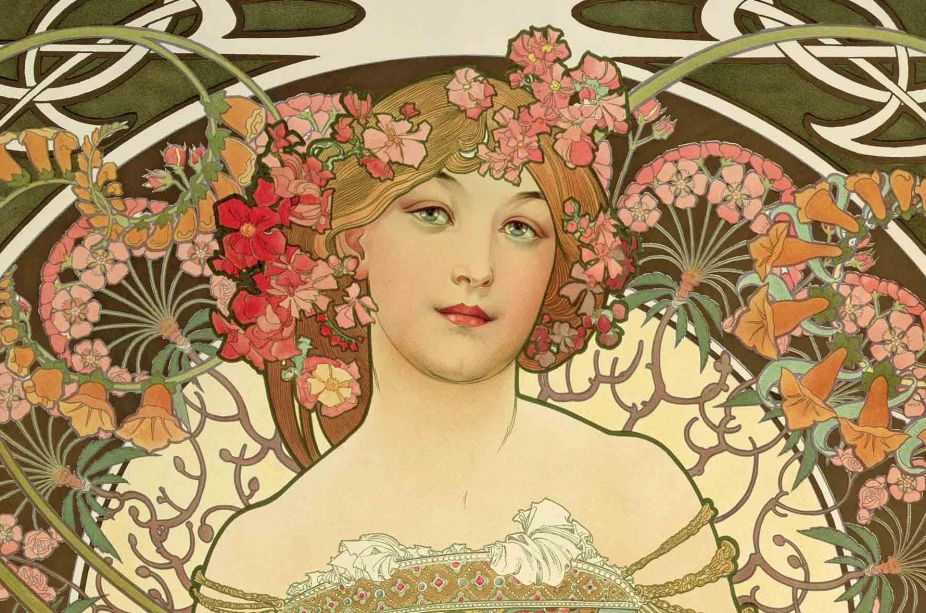
One of my favorite artists is Alphonse Mucha, the Czech Art Nouveau artist. I think the way in which he depicts women is just beautiful…so perhaps this is telling that I believe beauty, of one sort or another, in one way or another, is an important facet of art. His pieces also depict real women, which adds a personal connection to the works of art. I suppose Mucha’s works give me various feelings that these philosophers have indicated as important to art…AN experience, the pursuit of truth, complexity, serious content, distance, purpose, etc. Thus, why he is one of my favorite artists and looking at, or experiencing, his works is such a pleasure for me.