gooollysandra

Thoughts on thoughts and images of beautiful things

The City

0

95b0fc8c4a6111e2bf8b22000a1fb004_5

What is it about the city that I love so much? The lights, people everywhere, the noise, and just the overall feeling that comes over me when I’m in the city. What’s interesting about a city are the things that come together to make the city what it is; things that on their own, wouldn’t classify as a city, but when brought together measure up to a city. It is the things that I mentioned earlier, like the buildings, the cars and public transit, the people, etc. that make a city a city.

9e3ee4b648b511e2ab9622000a9f1423_5

Beyond that, there are some cities that are intentionally created as cities, and others that accidentally become cities when all the components come together on their own or by accident – as Dostoevsky writes in Notes From Underground, “Cities can be intentional or unintentional.” Here he refers to St. Petersburg as being an intentional city that was planned and erected all at once, both spatially and intellectually, instead of coming together over time. Are cities that form unintentionally perhaps more authentic and enjoyable to live in? Who knows, but the Underground Man might think so, as he is not fond of St. Petersburg in part because it is so precisely and methodically planned out. The city’s plan, more so than just being physically planned out, also seems to have a plan for its residents; people are expected to be and act a certain way and the Underground Man doesn’t like it.

e920eb38ee6411e1b60722000a1e952e_5

Cities that I am particularly fond of – Chicago, Rome, Paris – have been partially planned out to a certain extent during certain time periods, but not entirely planned out all at once like St. Petersburg. They have gradually come together over the centuries and are still continuing to form and develop. So what is it that I like about the city so much? There is something about a city that encapsulates infinite possibilities in a way that the country does not offer, to me anyway. The country, which seems to go on forever in every direction certainly can seem to possess infinite possibilities, and it may well do so, but in a different way than a city does. When you look out onto a city, a big one anyway, it also may seem to go on forever in every direction, but that is not the kind of infinity that I mean. I mean, that cities seem to offer infinite intellectual and cultural possibilities for what one can become as person in that city. And this is what I like about the city…all the things that one can do in the city, and all the things that one can become in the city.

2012 in review

0

The WordPress.com stats helper monkeys prepared a 2012 annual report for this blog.

Here’s an excerpt:

600 people reached the top of Mt. Everest in 2012. This blog got about 2,000 views in 2012. If every person who reached the top of Mt. Everest viewed this blog, it would have taken 3 years to get that many views.

Click here to see the complete report.

Learning to love the charms of the Midwest

0

This fall I set out to capture various charms of the Midwest and Autumn splendor. I have always been a city girl, but lately I have been drawn to the quieter, calmer comforts of small towns. I reside in the Midwest (and have never been too fond of it), but I have recently grown more accustomed to it.

I use an old-fashoined SLR camera, not a digital camera. My intent is not to create a perfect picture by immediately checking what I have shot, but rather to capture things as they are full of imperfections. I also love the surprise of not knowing exactly what the picture will look like until later on when it is developed.


14700009 14700010 14700011 14700012 14700017 14700018 14700019 14700021 14700023 14700024 14700025 14700026 84640008 84640011 84640013 14700028 84640015 84640017 84640016 84640018 14700020 14700029 14700027 84640019


What is in the minds of others?

0

Lincoln_2-001_s640x427

Do you ever wonder what is inside other peoples’ heads? And what you would learn if you could have access to their thoughts – not only their thoughts, but also their perceptions and feelings of things? This seems like a rather obvious thought, but it occurred to me when I saw the new movie, Lincoln. Firstly, Daniel Day Lewis’ performance in the film is extraordinary, which is perhaps why this notion dawned on me during the movie. But what if we could gain insight into what others were thinking? Our lives and our thoughts seem to be so self-centered that sometimes we forget that other people have thoughts, perceptions, and feelings different from our own. And I just think it would be so interesting if we could get a little peek at what those thoughts are…

Cats of Portugal

0

The Berkshires in Autumn

1


Stories from the past

0

Visiting my grandparents in New England has always been a cultural experience. They are immigrants from the Czech Republic, former Czechoslovakia, and they certainly have a rich history to recount. I love hearing their stories, but also sometimes resent them for their strict ideals and harsh criticisms, in that German/Eastern European kind of way. My grandparents got married at a young age in Prague before leaving shortly after the Russians invaded and escaped communism. They left separately, my grandmother on a a scholarship to study in Paris with the promise to return but never did, and my grandfather escaped with help from a trustworthy (luckily) spy through the woods one night with only a briefcase in hand. My grandfather spent time in refugees camps in Germany before making his way to Paris to rejoin with my grandmother, and how incredible it is that they were actually able to find each other.

I’ve heard stories about the Nazis, one Czech soldier and one German soldier, going to my grandfather’s house at 6 in the morning, searching the house, taking their radio so they could not hear the news, and arresting his father, my great grandfather. He was a diplomat and was being watched when on a trip to Sweden and then arrested when he arrived back in Prague. He spent a few months in jail before being released because he knew German and the guards were worried he would overhear what they were saying. I’ve heard stories about loudspeakers throughout the city announcing who had died in the prisons that day and people in the streets crying for those they had known. I’ve heard stories about how the communists took away my family’s possessions, as well as their house because it was a nice house and forced them to live in a place that was not as nice because the communists wanted the house for themselves. I’ve heard stories about the communists not allowing my great uncle to pursue his studies because some of his family members (my grandfather) had fled the country. I’ve heard stories about the communists forcing a family member who had been a lawyer to leave his job and work in a coal mine. I’ve heard stories about a second cousin, now a publisher, writing underground pamphlets protesting the communist regime.

It is stories like these that interest me in what my family and so many others like them have gone through under the Nazis and then the Communists. It is stories like these that I associate with visiting my grandparents in New England and haunt me – not necessarily in a negative way, just in an intriguing way. I was recently in New England and these memories and stories resurfaced, as I talked to my grandfather, who is unfortunately in a declining state and not as coherent as he used to be, but I hope to hear more stories in the future still…

In search of a more beautiful place

0

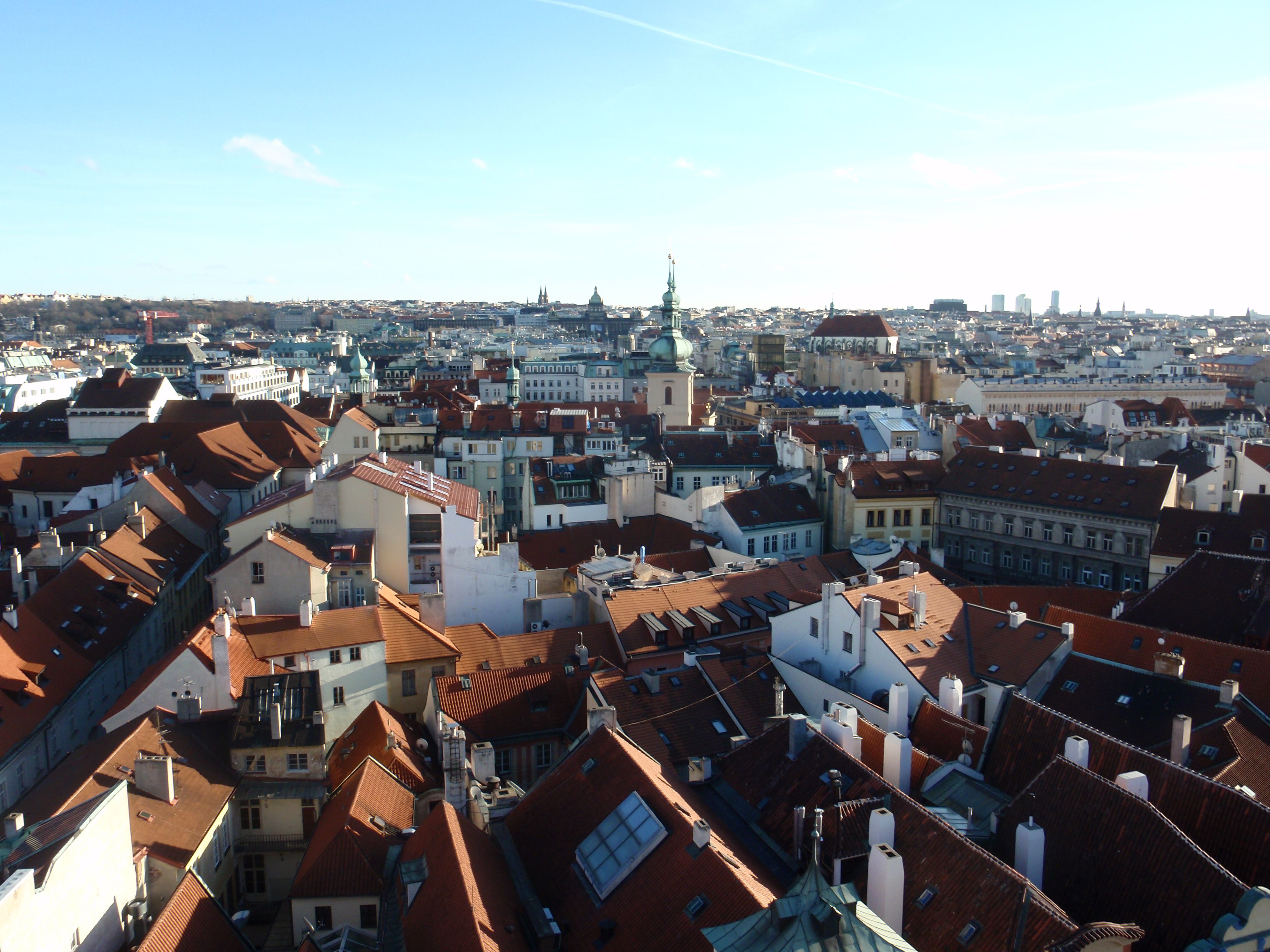
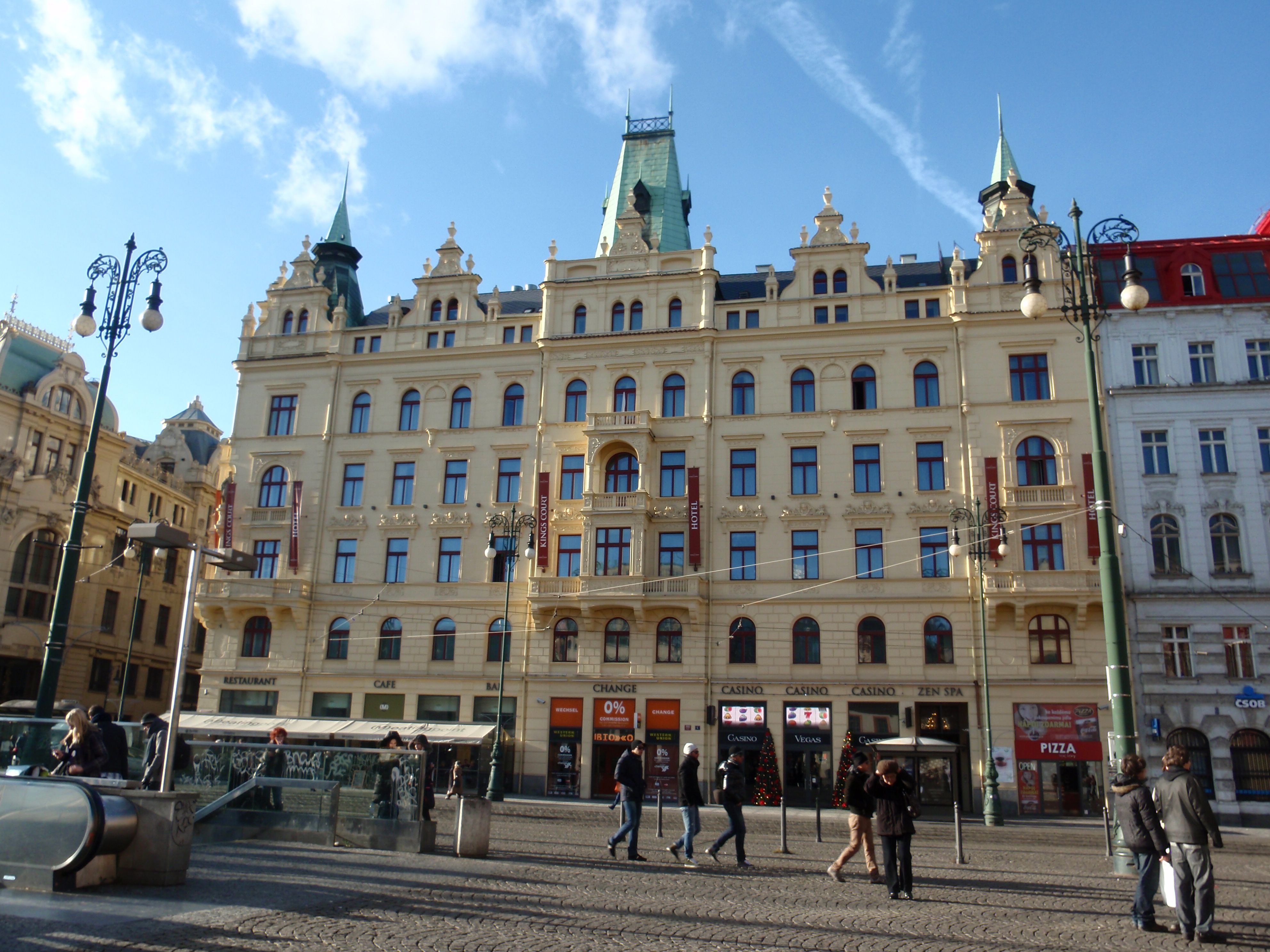
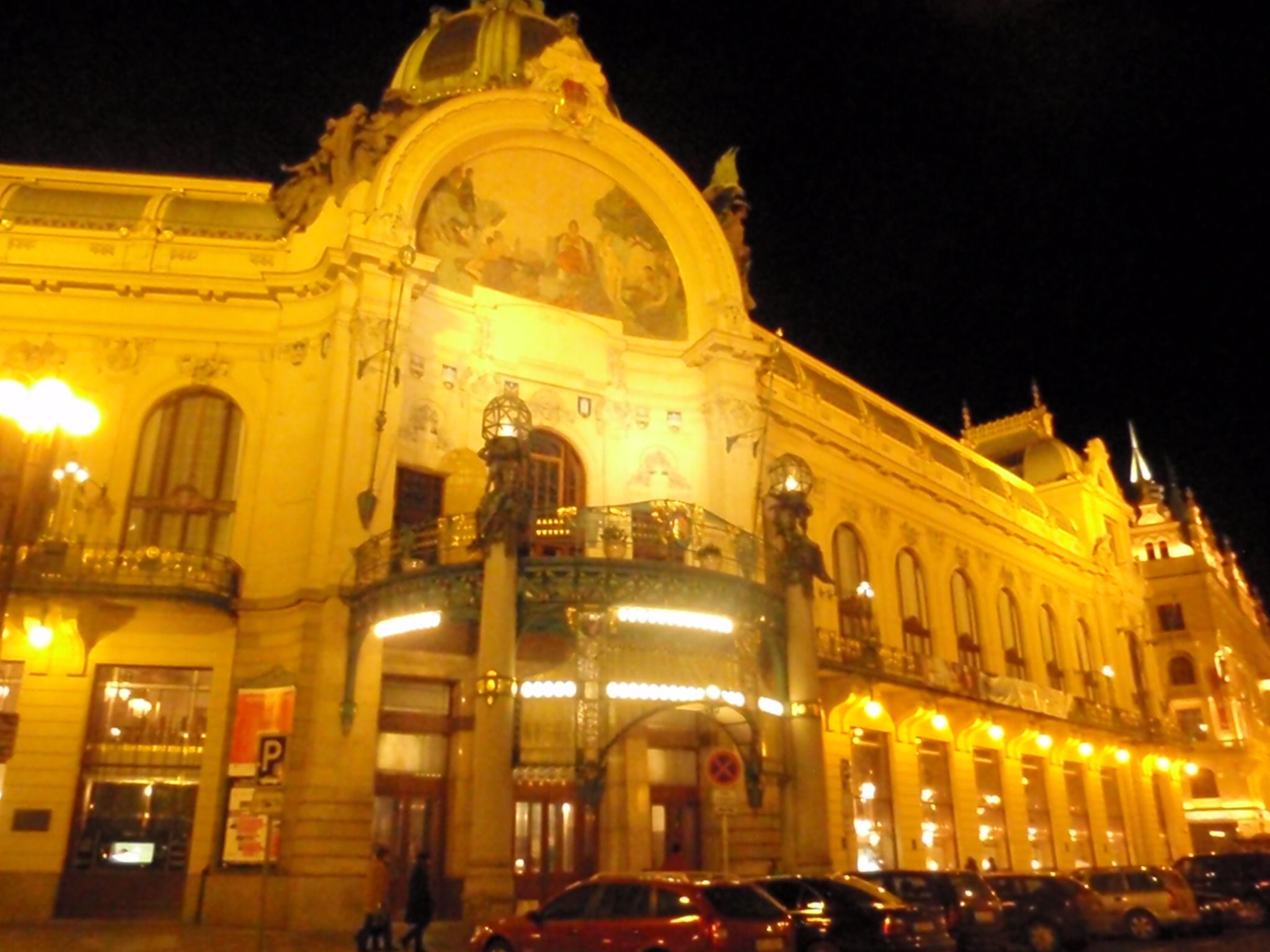
I am searching for a more beautiful place than here. Here, is Indiana. More beautiful places, for me, are many places in Europe. Last winter, I went to the Czech Republic and spent most of the time in Prague – the most magical city in the world (I think!) Prague is so beautiful and charming; it’s like a dream. So full of history, like many places in Europe, and you can really see it and feel it everywhere around you. You can tell that the people there lead, and have led, a hard life. The beautiful city they live in seems to be of no avail to them because it is simply where they live, much to their detriment perhaps (because of what they have been through with the Nazis and then the communists). But to a visitor, even aware of its history, it seems so magnificent and just beautiful.

Another beautiful place I have had the pleasure of enjoying is Rome, Italy. I was born there and lived there for the first eight years of my life. Rome, of course, is very historic and its history can certainly be seen and felt there as well. It is home to many attractions that people flock there to see, like the Colosseum, the Pantheon, the Spanish Steps, the Vatican, Campo di Fiori, Piazza Navona, etc. Places that I experienced everyday as a young child and could not possibly understand their significance at the time. Even now, I suppose I do not view the city as other tourists do because to me it was simply home for 8 years…home, 5 minutes from the Pantheon and Piazza Navona…what sounds like a dream now looking back on it.

Places like these, that are so much more beautiful than the United States, to me, are places I would like to try to get back to in the near future.

Fade…

2

I recently saw the movie, Beasts of the Southern Wild, and it reminded me that when we are touched or moved by a problem in the world or something that saddens us, it only seems to have an effect on us while we are confronted by it and afterward the effect slowly fades into no effect, or at least not as great as the initial effect. I thought this movie, although not easy or enjoyable to watch because it is so sad, is very good. Seen from the perspective of a young girl, her philosophy on life and death, suffering and courage, is very interesting. It is so sad at times but also so beautiful that it made me cry. Her insight into what life might mean is simple and extraordinary. The saddest part of all, perhaps, is that we are so moved by something like this in the moment, but afterward it fades away and we forget about what bothered us about it in the first place. This is the sad part. We need to try to keep up the feeling of emotion evoked from such things in order to be moved to make a change.

“…the form is the same but not the substance.”

0

I’m currently reading a book called The Glass Room by Simon Mawer and there was this sentence that struck me, “…the form is the same but not the substance.” I often think of this notion in relation to shadows and the actual shape that they represent, and dreams and the life they represent. Shadows are the same form of the shape they represent, but not the same substance. This is clear. For example, the shadow of myself walking down the sidewalk may have the same form outlining my body, but it certainly isn’t the same substance – my shadow is not actually myself and does not contain anything that makes up the essence of myself. Yet both myself and my shadow share the same form. So in this way, it can be very disillusioning as to what is the real thing and what isn’t the real thing, even though they may both have the same form and look generally the same.

And when it comes to dreams, it seems as though our dreams are a reflection of the thoughts we have while we are awake and conscious of our thoughts. So they seem similar, yet they are slightly different because they are experienced in different realms of consciousness. It is thought that our dreams are things that we worry about or are on our minds subconsciously. Therefore, it seems as though our dreams are shadows of our thoughts while we are conscious and awake. But how can we know? What if our dream state is the real thing and our conscious ‘awakeness’ is actually the shadow? I’m sure psychologists that study sleep and dreams would argue otherwise, for the former; however, I often wonder if my dreams are somehow more real than my life when I am awake…

In any case, it is interesting to think about the difference between form and substance, shadows and the objects they represent, and dreams and the thoughts they represent.