When you live alone, you’re not accountable to anyone or anything, allowing you to slip away or slip by without doing anything particularly productive. When you live alone, it’s easy to become inactive because there’s no one pushing you to do anything. This is not necessarily a good thing, even though it may seem like an easy way to live. Doing the smallest of things requires so much effort and it is hard to motivate oneself to be productive when there’s no one around watching you. But living alone also has its perks. It gives you time to think without the influence of others; being alone with one’s thoughts can be a very scary place to be, but liberating as well. When you’re left to your own defenses your mind wanders to places you don’t want it to wander. And as much as you don’t want to go to those places in your mind, you have to if you want to explore and discover yourself. As scary and unwelcome as it may be it’s a necessary process that real people must go through. Those who choose not to go through it will pay for it, resulting in superficiality. Living alone one can become very lonely and loneliness is the worst sentiment to feel in abundance. Or, on the other hand, you can take advantage of time alone to do things that you’ve always wanted to do but have never had time for; not only that, you can do things that you find comfort in, which you’re prevented from doing if constantly surrounded by others. It’s called self-indulgence and pampering. So, being alone…although it can be scary/lonely/sad at times, has a lot of advantages to it too. We are, after all, fundamentally alone in the world. Regardless of family, friends and loves ones, at the end of the way it’s just us. The only one we have to respond to is ourself.
Category Archives: Philosophy
What makes art valuable?
0“Unlike art, Newsom said, ‘design is not inherently valuable.'”- Designing Men by Paul Goldberger, Vanity Fair
This quote brought me back to a Philosophy of Art class I took in college. So if design is not inherently valuable, then art is? And what is it that makes art inherently valuable if that is the case? It’s a difficult question with no clear answer, but it is very interesting. How does art gain its value? Does it depend on the artist? And how does that artist gain enough notoriety or credibility to create ‘valuable’ artwork? Or does it depend on its reception and how many people see it? But how does an emerging artist break into the art world and gain exposure? All these questions lead to a very complicated structure that exists in the art world, whether the art is mainstream or unrecognized, and it can be difficult to know where and how to start answering these questions.
What really strikes me is how artists gain notoriety. How do they get discovered? Does it require money to pay someone to show your art in a fancy gallery regardless of talent? Or can regular people submit their art to galleries and be accepted based on merit and talent? That would certainly be the hope, but it seems increasingly harder to do that in this day and age.
Here are two works by a famous artist, Egon Schiele. I like them, but someone else who may not like his style may not like them at all. Either way, he is an established, well-known artist. I not only like them aesthetically, but I also like them knowing the historical and cultural context they come from – early 20th century Vienna. It helps that he had a famous artist as a mentor, Gustav Klimt, which undoubtedly propelled his career forward. So perhaps this is the way to do it…seek out a mentor who has relative notoriety and learn what you can from him/her in the hopes of it leading somewhere.

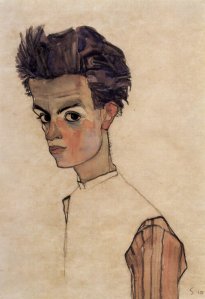
So what makes these two works valuable? The fact that they were done by a famous artist? Or would they be valuable in their own right because of their aesthetic quality even if you didn’t know who they were done by? Which brings up another question – when you look at a piece of art, can you tell whether or not it was made by a famous artist? I think we instinctively want to know who the artist behind the work is when we look at art, or at least I do, and if you are the least bit educated in art history you will know whether or not they are well-known. Therefore, I don’t know if it is possible to look at a serious work of art and separate it from the artist. And if we can’t separate the work from the artist, how do we know we like the work for the sake of the work itself or because of the artist who made it? For me the two go hand in hand. It is very hard to separate the two. But often there are works by artists that I don’t like even though I may like the artist as a whole. For example, Egon Shciele – I like him as an artist and I like many of his works, but not all of them. So in these cases, when I like the artist on the whole but not a particular work by that artist, I judge the work for the work itself and not for the artist. If one liked every work by a particular artist, one would be judging the work by the artist and not by the individual works. I don’t think there is one approach to evaluating art that is better than the other, they are just different.
But still, regardless of how one evaluates art, how does art become valuable? It seems strange to place a price tag on a work of art because it is hard to assign a value to it in terms of weighing how much the materials cost, how much the labor is worth, and what the desired profit is. It’s not like an object made in a factory that can be priced in this way. There is something about art that is transcendental by which it acquires value. And it is precisely for this reason that the price of art is typically very high – because its value is so hard to define so it is just easier if we give it a high price tag. It is a shame though because this means that it is really only available (to own at least) for the rich. Those who can’t afford to own a nice work of art can still appreciate it in a museum or gallery, but the ownership of art is a luxury for the wealthy. I tend to think that even if you own a work of art, you don’t really own it, but are rather just taking care of it and keeping it safe for the artist who created it, who I believe still ‘owns’ it. It is one thing to buy a work of art and own it in that sense, but I don’t think that means you really own because you didn’t create it. I believe the ownership lies in the creator, even if it is no longer in the creator’s physical possession.
In an attempt to help my artist boyfriend gain exposure, I am going to present some of his art here. How do you think it compares to Egon Schiele? If you didn’t know that it wasn’t made by Egon Schiele, would you think that it possibly could be? Or Van Gogh maybe?
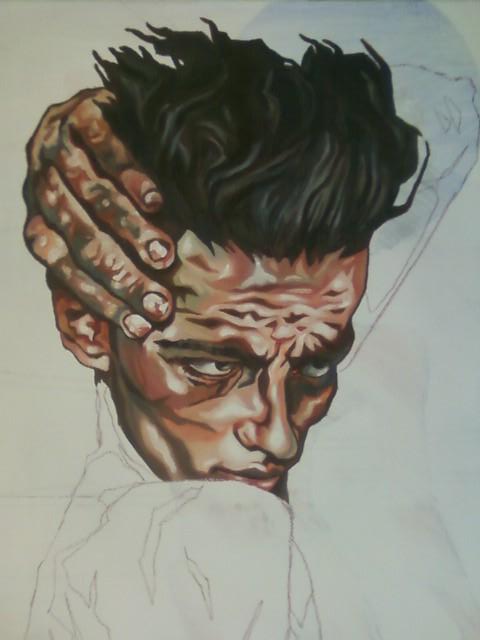
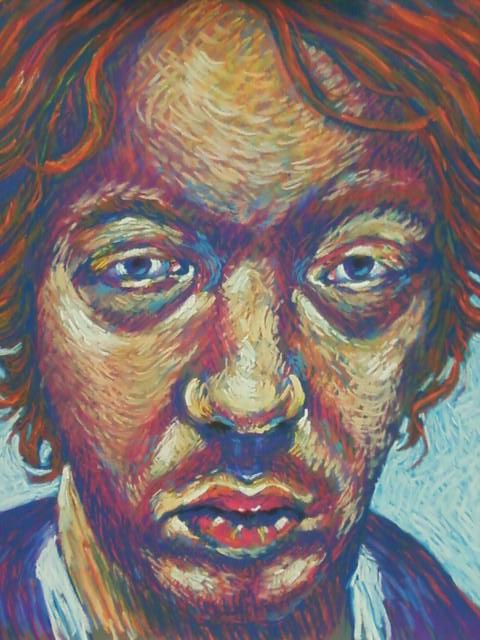
The way that artists draw inspiration from other artists and tend to imitate their style is quite common, you can still tell that they are done by different artists. Artists can draw upon inspiration from other artists while still creating their own style.

It’s a shame that some artists, or perhaps even most artists, only gain notoriety after their death because they don’t get the chance to revel in it or reap the financial rewards of being a well-known artist. Why is it that many artists only become famous after their death? Is there something about the fact that they’re no longer living that their work becomes almost sacred because you know they can’t make any more of it? It’s a strange thing and there is something that just doesn’t seem quite right about it. Artists should be able to experience their own notoriety and know that their art is appreciated by people.
More about Egon Schiele and his work on Artsy.
Identity
0
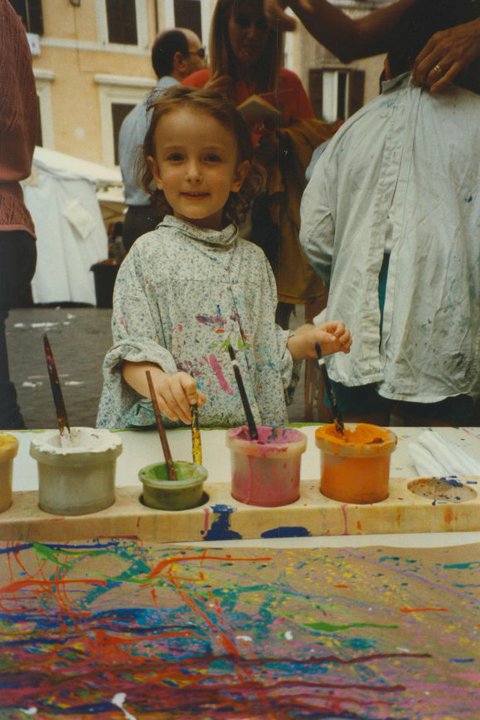
Establishing a place and identity has been difficult for me since I was born in Italy, lived there for 8 years, and then moved to the United States where I have spent last 14 years of my life. Wow, that’s a long time. I don’t like counting how long it’s been since we left Italy, so I often lose track of how long it’s actually been. But I’ve always had this conflict within me of not really knowing where I belonged. It hash’t been overwhelming to the point where I feel completely lost, but rather just indifferent to both Italy and the U.S. Despite being an American citizen and living in the U.S. for most of my life, I do not feel very American and certainly don’t feel patriotic in the least. At the same time, I can’t say that I feel very Italian either. I was born there and spent those early formative years of my life there, but I am not ethnically Italian, and therefore, was more like an outsider living in Italy. Of course, the Italian people are very warm and embracing, so we didn’t feel like intruders or out of place. I am extremely grateful for my childhood in Italy, as I realize this is an opportunity that not many American children have. I have the fondest of memories of my birthplace and I wouldn’t trade it for anything.
That being said, my love for Europe and desire to go back exceeds my interest, or lack thereof, to remain in the U.S. and build a life here. But then again, my family is here in the U.S. and going to Europe on business seems challenging for non-EU citizens. So I suppose it will continue to be a conflict, but will hopefully be resolved at some point in my life, if I’m lucky.
Our place in societal roles, influenced by Downton Abbey
0It’s hard to know what to value in life and how to feel about societal roles when we’re in between a proper, aristocratic mindset and have taken on a more modern, liberal and informal attitude toward things. Perhaps we are no longer in between the two, but rather pretty far into the modern mindset. But as I like to think of the past, I do still care about propriety.

I was reminded of this recently when I was watching the third season of Downton Abbey, which takes place in the early 1920s when things are shifting away from the older aristocratic ways to a more open-minded attitude. Various people in the family have differing opinions – some clinging onto propriety, others (women especially) breaking out of the traditional roles in the home, and others still being pushed in one direction or the other by fellow family members (whether or not they agree is another question).
So as I watch Downton Abbey and observe how each character approaches what is proper and what isn’t, what is acceptable and what isn’t for a person of their stature, and how they find their place in the changing world around them, I think about my own attitudes towards important things that define our lives and the way we value things like money, education, family, manners, etc. I like to think that these things are still important, despite the shift for a more relaxed attitude towards life. I certainly embrace the positive advances we’ve made, particularly when it comes to the advancement of women, but holding onto a little bit of the past and what was valued in the past, such as Downton Abbey’s setting, I like to think that there are still some things which hold a certain amount of importance, like manners and cordiality, that we should not criticize. People may think of this stance as snobbish and elitist, but I don’t think it is. I think it is merely valuing the basic, important things in life that make us dignified people and there is nothing wrong with that.
Fantasies
0We all have fantasies about what we want to do in life. But the question is, how do we decipher a fantasy from what we want to turn into reality? I’ve often thought about different things that I would like to do, like teach English abroad, make movies, be an interior designer…but I can’t tell if these are things I would actually do, or if I just like to think about them. What propels one to actually carry out an idea rather than just think of it as a fantasy? I think it takes a great deal of perseverance to carry out what you actually want to do. Sometimes it’s easier to settle for something that you might not like quite as much, but is still somewhat enjoyable.
Aesthetics vs Feelings
0There seems to be a separation or a divide between aesthetics and feelings. I often look at pictures of things…cities, nature, landscapes, interiors, & see them one way from an aesthetic standpoint and admire them. But then, when I think about how they might feel if surrounded by them, I wonder if I would have a different feeling…
Realities
1We build up worlds, or lives, up around us, but what happens when they fall apart? I’ve noticed this recently as my routine and my livelihood are constantly changing and it’s hard to know what my reality is. It’s a very strange feeling. But are our realities supposed to be constant, or is it only natural that they are always changing as we ourselves are constantly evolving? I guess only time and further experiences and changes will tell…
If my life was a movie…
0If my life was a movie, it would only be two hours long.
If my life was a movie, I wouldn’t have to do any real work. It would just appear as if I was doing work…my workday would be 1 minute long.
If my life was a movie, my relationships wouldn’t be real; they would just seem effortless and perfect.
If my life was a movie, there would be music playing in the background during happy and sad moments.
If my life was a movie, I would look perfect all of the time.
If my life was a movie, I would be somewhere else in the world besides Indiana.
If my life was a movie, I would have a fantastic wardrobe.
If my life was a movie, money would be no object.
 gooollysandra