gooollysandra

Thoughts on thoughts and images of beautiful things

Category Archives: Film

Blue is the Warmest Color

2

LVA_37

Upon seeing my first preview for Blue is the Warmest Color I didn’t really know what to think about it except that I loved the music selection by Beach House. By the second or third time I saw a preview for it, my interest was hooked. The night I went to see the film was memorable and I distinctly remember that it was raining and there weren’t many people in the theater. I got popcorn, as I usually do, but it didn’t seem to last me very long because the movie was lengthy, rounding out at 3 hours. By the time the movie was over and I left the theater it was 11 o’clock, later than I usually leave a movie theater and it was raining again. I was excited to see the film, but I had not idea what kind of treat I was in for; it’s the kind of movie that you remember the whole experience of going to see it, and not just the movie itself, which are always fond memories for me.

images

I can honestly say that Blue is the Warmest Color is one the most beautiful, genuine movies I have ever seen, which I was not at all expecting going into it. Its NC-17 rating is definitely justified, as there is a fair amount of sexual content in it, which I can imagine turns off certain audiences that would otherwise really like the film. However, for me, this is not what I remember about the film. What I remember is the incredible sincerity of emotions expressed mostly by Adele, the main character, but also by her lover Emma, and the authentic love story that it is. Their relationship exemplifies an exploration that most of us have probably thought about, but not necessarily carried out. I for one know that I have questioned my sexuality, but have never had a sexual experience with a woman and don’t plan to. It is, however, something I have thought about and I am not ashamed or embarrassed about it.

The French language is beautiful and it particularly stood out to me during the literature classes that Adele attends. The ideas expressed in the classes made me envious and wish I was there. The plot flows so well and it does feel like a long movie, as it is, but it certainly keep you intrigued the whole time. The soundtrack is appropriately placed alongside each scene to evoke certain moods, which, for me, was particularly strong during Adele’s birthday party, as the video above demonstrates. Then there’s the party in celebration of Emma’s artwork and the conversations at the party feel so real, as do most all of the conversations in the film, and made me wish I was part of it. Adele and Emma open up to each other about philosophy and art and you can really feel the intimacy between them, not only physically but also intellectually since they’re always learning from each other.

The film is not without heartbreak, but it wouldn’t feel as authentic if it wasn’t, since heartbreak is such a natural and inevitable facet of love. Their breakup is incredibly sad and although Emma may seem overly harsh, her reaction is fairly accurate; even so, I found myself sympathizing with Adele. I felt the heartbreak the most towards the end when Adele and Emma meet again after having been broken up for a while and I could literally feel that there was still love between them, and although they have a reunion of sorts, it ends with them going their separate ways again. I really felt for Adele in a way that I’ve never felt for any other character in a film before. It’s an incredibly powerful scene. I could also identify with Adele in the way that she desperately tries to move on with her life without Emma, but unsuccessfully so. I think anyone who has been broken up with can identify with her in this way to a certain extent. It’s striking how the actresses are able to show so much real emotion on screen, which makes it feel as authentic as it does and evokes the powerful response from its viewers that it does.

The French title of the film, La Vie d’Adèle – Chapitres 1 & 2, suggests that we might perhaps see a sequel with more chapters. I certainly hope so, as I am dying to know more about Adele’s life and her intimate relationships. Although with the controversy over the filming of the movie, it may be unlikely that we will see more on this project from these two actresses.

Her

0

her-movie-review-1

Her transported me to a different place, as movies often do, but I literally felt different when I walked out of the theater. The quaint street that the local, independent movie theater is on and the people strolling about seemed different to me, and as I got into the car and drove home I felt a tiny sense of transformation – not in a significant personal way, but like the world around me had transformed. It hadn’t, of course, but the film’s futuristic setting stayed with me after the film as I left the theater. Instances like these when your perception is changed and things just don’t feel right, even if not in a bad way, are bizarre. I felt refreshed and intrigued by this new world that I had just experienced.

Theodore’s relationship with a character who doesn’t have a physical presence reiterates the fact that even when we are in a relationship with someone or have people in our lives, we are still fundamentally alone. He is obviously physically alone, but also emotionally unfulfilled even though he is in a relationship of sorts. So for me, this doesn’t so much speak to loneliness as it does to aloneness, which is such an intrinsic part of our nature. But it also captures intimacy in a unique and genuine way that is compelling and leads you to think about whether or not one actually needs physical intimacy in a relationship. Jaoquin Phoenix who plays the role of Theodore carries the film very well and keeps you intrigued the whole way through even though so much of the film is centered on him and him alone.

I loved the movie. Although the premise sounds superficial, it exhibits real human emotions and challenges in a genuine way and transports you to a different kind of world.

Labor Day

0

images

Labor Day is a film about loss, one of the hardest things that we face in life but also something that we all inevitably experience. I know it hasn’t gotten the best reviews, but there were definitely aspects of it that I really appreciated. I thought the cinematography was beautiful and captured light and intimacy very nicely. At times the plot felt like inorganic and like it didn’t flow, but the film did have some redeeming qualities as it went on. The character development was good, especially of Frank and Adele, and watching their relationship blossom was touching. Food and the art of cooking was a nice addition to the film, which is something that I personally always enjoy. There is something about cooking and the way that it employs all the senses that is almost seductive and I thought the way the film portrayed food was captivating. There were elements of fear and suspense as the plot revealed itself and I began to feel sympathetic towards the characters who at first seemed unlikeable and emotionless. The plot takes place over the course of a few days, Labor Day weekend, but the present is intertwined with flashbacks from the past, which make the film feel longer than just a few days. This also allows you to get to know the characters better than you would otherwise. The sense of loss is the most prominent part of the film and it can genuinely be felt at times throughout the whole film, which is heartbreaking but very relatable since it is an inevitable part of life and something that affects all of us in varying ways. There was, of course, also a sense of hope at the end and it did have a happy ending, but it shows you how life is a journey with many hardships and only some rewards.

The movies

0

It’s interesting how much time people spend talking about movies even though they’re not real. But I suppose this applies to literature and TV shows as well. But there’s something about the movies and how you can hear the rumblings of people sharing their opinions at the end of a film as the credits start rolling and the lights come on. Growing up, I vividly remember my parents and I going out to dinner after the movies and spending a majority of the dinner talking about the movie we just saw. It’s interesting to hear different perspectives from everyone and how thoughts about a movie come to you little by little, so there is always something else to say about it.

Movies represent life. We can see so much of ourselves in them, and not only us but others as well. This is what makes them seem so real to us even though they are completely fictionalized. They are, of course, based upon life as many of them represent true stories, but the way in which those stories are captured and put into a movie format is created and stylized. Movies that are based on true events are not organic, but are thoughtfully produced in every aspect from the sequence of the plot, to the characters, to the soundtrack, to the costumes, etc. Movies, even those based on true events, transport us to a different time and place, but are still connected to reality and that is why we can see ourselves in them so vividly.

Nebraska

0

wk-nebraska1122-1

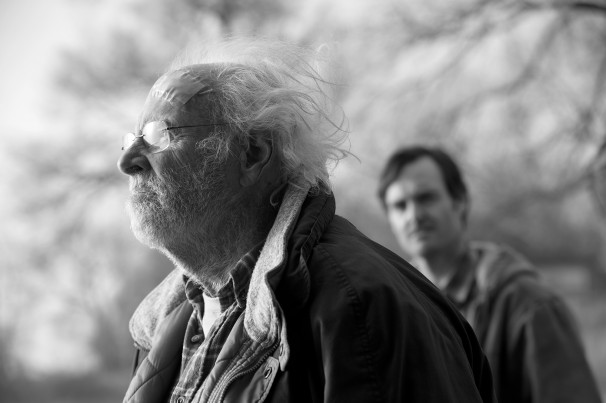
Nebraska is a film about aging, and it not only resonates with older people for whom aging is more of a concern, but as a young person I also felt like I could relate to it because it was very much about the children taking care of their parents and watching them age. While watching the film I started to think about my parents aging and how difficult it will be to witness that several years from now and it made me really sad. It must be very trying to see your parents unable to do things as they used to and unable to remember things that seem so subconscious. And then to think that this path only leads to death and the thought of not having your parents around anymore, ever, is absolutely heartbreaking. It is for me anyway because I am very close to my parents, but I suppose that not everyone is and so I can imagine that not everyone feels this way.

Nebraska provides an interesting commentary on rural, lower to middle class America. The vast expanse of the American west is apparent and not necessarily in a good way. Let’s put it this way – if you ever think of your town as being the worst place on earth, think again because it could be worse. I think the black & white cinematography only reinforces this sentiment, but it is also beautiful at times. The movie is quite funny, especially Woody’s lack of awareness and indifference, and his wife, Kate, with her inappropriate wit and criticisms of all those around her. The lack of communication combined with the unwillingness of people to listen and understand each other also sets the stage for a comical series of misunderstandings. I appreciate the authentic feel of the film, as it seems that several of the characters are real people and not actors. This is something that is typical of low budget films, so it was surprising to see it in a big Hollywood movie, but also refreshing. David Grant, Woody’s son played by Will Forte who has mostly done comedy, plays a very serious role and is one of the only sympathetic characters. He is the only one that is supportive and caring for his father from the beginning. The film is funny, but underneath the banter it has a very serious tone and brings to light the difficulties of aging, not only for the aging, but also for the young who have to watch it occur.

Inside Llewyn Davis

0

Inside-Llewyn-Davis

Is it possible to like a movie even if virtually all of the characters are unlikeable? Yes, and the movie is Inside Llewyn Davis. The main character, Llewyn, although callous most of the time, does show a glimmer of emotion mainly when it comes to one thing – the cat for which he unwillingly becomes responsible. Even when it comes to his music, which is his great passion and the focus of the film, he does not seem as moved by it as he does by the cat. There are many unlikeable characters in the film: Jean, the girl who Llewyn perhaps impregnated and perhaps not, whose character seems underdeveloped and repetitively irritating with her criticisms of Llewyn, Roland, the grossly overweight pimp-like character with whom Llewyn rides across the country in a car, Mel Novikoff, his agent who doesn’t even believe in him, and Pappi, the owner of the bar where Llewyn often plays. There are, however, some likable characters too but they have less significant roles and therefore don’t have much of an impact on the film – Jim, Jean’s husband, who is innocent and sympathetic, Al Cody, who is also sympathetic as he takes Llewyn in for a night or two, and Mr. and Mrs. Gorfein, the parents of his deceased music partner who own the cat that Llewyn inadvertently becomes in charge of. The film definitely has a sombre tone to it, and if you’re a cat lover, the cats’ fate is very sad. Llewyn’s quest for success in his music career doesn’t go too well for him and his desperate way of life is appropriate for a struggling artist or musician’s way of life. The soundtrack is excellent and completely captures the 60’s folk music scene.   Despite the film’s mournful resonance, Llewyn’s apathetic character really works and it is Coen brothers classic.

What we can’t do in life, we live through the movies

0

What we can’t do in life, we live through the movies. This is what came to mind as I watched The Secret Life of Walter Mitty. Watching Walter Mitty go on his adventures was inspiring, but also unrealistic. We would all love to undergo a drastic change in our lives by going on adventures of that magnitude, but unfortunately there are a myriad of reasons why we can’t – work, money, family, responsibilities, time, and fear to name a few. But this is what the movies are for and what makes them so remarkable. Even if we can’t do something in our own life, we can watch it on screen and in a small way experience it ourselves. Having adventures like going to Greenland and hopping on a helicopter only to land in the ocean before being rescued onto a boat, or going to Iceland and experiencing a volcano eruption, or going to the Himalayan mountains to witness the sighting of a snow leopard are made possible by the movies, even if only in our imagination. And this is why I love the movies.

Walter Mitty’s transformation throughout the film stood out to me as the focal point and it was apparent in everything from his clothes to his personality to his interactions with those around him, including the woman he was trying to impress by his adventures. The soundtrack, which included David Bowie, Arcade Fire, Of Monsters and Men, and Rogue Wave really made the film. It added so much feel-good sentiment that I don’t know if the adventures would have been quite as exciting and inspiring without the soundtrack or had there been different song choices. It was just perfect. It was definitely fun to watch, although a bit confusing at times because of Walter’s zoned out tendencies, which sometimes made it hard to decipher what was actually happening and what was just in his imagination. It did, however, become more clear after his first couple of zoned out episodes. Ben Stiller, as the main actor and producer of the film, did a great job, and Sean Penn’s small role added just enough oomph. I would say the moral of the film is to embrace the person you would like to be and just go for it. Also, to go on adventures.

“To sustain ardor, one must be in love not only with the thing itself, but also with the idea of the thing itself.”

0

“Moral: To sustain ardor, one must be in love not only with the thing itself, but also with the idea of the thing itself.”

I recently read this quote by Stephen Dankner in a newspaper article in The Advocate, which is based in New England, and I read it at just the perfect moment as I am trying to decide what I want to do with my future; more precisely, what I want to pursue graduate studies in and this quote sums it all up. So what do I love in essence and in thought? At the moment I am trying to make up my mind between Art History and Film. Submitting applications for both is a bit confusing and it’s hard to imagine which I would enjoy more. But reading this quote brought up a very basic, fundamental notion that I hadn’t thought of but makes all the sense in the world. Do most people have the luxury of loving what they do as well as the idea of it? Probably not. I think it’s a hard to achieve because it’s hard to even figure out what you love in essence AND in thought.

Netflix

0

Netflix is not the most healthy way to watch television. I’ve recently become obsessed with a show and cannot stop watching it. The nature of Netflix in that it lets you watch episode after episode until you’ve watched about 100 episodes, I would consider unhealthy – especially if it’s a show that gets you hooked and leaves you hanging at the end of every episode. This kind of obsessive watching that I’ve been doing over the past couple of days has caused me to be very tired and distracted at work because all I can think about is watching the next episode (I’m exaggerating a little. I haven’t watched 100 episodes back-to-back and I haven’t been that obsessive, but nevertheless obsessive to a certain extent). So what is the cure to this obsessive behavior? I wonder if Netflix should put a cap on how many episodes one can watch in a row? Taking into consideration, of course, whether it’s a half hour or hour long episode…or maybe we should just be able to exert some self-control stop and watching on our volition. Yes, that’s probably the better option.

Our place in societal roles, influenced by Downton Abbey

0

It’s hard to know what to value in life and how to feel about societal roles when we’re in between a proper, aristocratic mindset and have taken on a more modern, liberal and informal attitude toward things. Perhaps we are no longer in between the two, but rather pretty far into the modern mindset. But as I like to think of the past, I do still care about propriety.

Downton-Abbey-Season-1-downton-abbey-31759162-1600-1046

I was reminded of this recently when I was watching the third season of Downton Abbey, which takes place in the early 1920s when things are shifting away from the older aristocratic ways to a more open-minded attitude. Various people in the family have differing opinions – some clinging onto propriety, others (women especially) breaking out of the traditional roles in the home, and others still being pushed in one direction or the other by fellow family members (whether or not they agree is another question).

So as I watch Downton Abbey and observe how each character approaches what is proper and what isn’t, what is acceptable and what isn’t for a person of their stature, and how they find their place in the changing world around them, I think about my own attitudes towards important things that define our lives and the way we value things like money, education, family, manners, etc. I like to think that these things are still important, despite the shift for a more relaxed attitude towards life. I certainly embrace the positive advances we’ve made, particularly when it comes to the advancement of women, but holding onto a little bit of the past and what was valued in the past, such as Downton Abbey’s setting, I like to think that there are still some things which hold a certain amount of importance, like manners and cordiality, that we should not criticize. People may think of this stance as snobbish and elitist, but I don’t think it is. I think it is merely valuing the basic, important things in life that make us dignified people and there is nothing wrong with that.